

News & Adventures

Aerial Photography Wall Art: A Buying Guide
I've spent the better part of a decade shooting doors-off from helicopters and light aircraft up and down the Gold Coast, across Brisbane and out over the Whitsundays. It's a different way of seeing a place you think you already know, and it photographs differently to anything shot from the ground, which is why I get asked more questions about buying aerial prints than almost any other style in the shop. Here's what I'd tell you if you asked in person.Why aerial works so well as wall artFrom directly above, familiar places turn into pattern and colour. A wave becomes a line. A stretch of sand becomes texture. A city becomes geometry. Skyline Panorama, one of my recent Surfers Paradise shots, is a good example, the same coastline everyone's seen from the beach, but shot straight down it reads as an abstract composition first and a place second. That's the appeal: aerial prints tend to work as a genuine piece of art in a room, not just a photo of a nice view.Choosing a subjectCoastline shots, Burleigh Heads, Snapper Rocks, Currumbin Alley, read as recognisable, grounded pieces, good if you want the location itself to mean something. City shots, the Story Bridge, the Brisbane river bends, lean architectural and suit a study or office. Then there's the genuinely abstract end of the range, patterns in the sand at Whitehaven Beach like Shark Impression and Snake Skin, along with the Western Australia salt lake and shark bay series, which read as pure shape and colour and suit a space where you want art first, location second.Orientation and sizeAerial shots are often shot square or in a wide panorama rather than the usual landscape crop, which changes where they work in a room. A panorama like Skyline Panorama wants a long, uninterrupted run of wall, above a sofa or a dining table. Square crops sit well in tighter spaces or as part of a pair. As a general rule, aim for artwork to fill 60-75% of the available wall space, and if it's going above furniture, two-thirds the width of the piece below it.Framed, canvas or acrylicThis one comes down to the room more than the image. Acrylic gives you the most detail and a real depth to the colour, but it's reflective, so it wants a wall that isn't fighting glare from a window or a light directly opposite it. Canvas absorbs more of the light hitting it, which makes it the better pick for a bright room or a wall that catches direct sun. Framed is the traditional, timeless option, and if you're worried about reflection but still want a frame, pairing it with our non-reflective glass cuts the glare right down. Have a look at the room itself before the image, that's what decides which one's right.Where to startThe full range is in the aerial photography collection, the more graphic, pattern-led work is in Abstract Aerial Art, and the Gold Coast and Brisbane sets are broken out separately if you know the area you want on your wall.
Learn more
Surf Photography Wall Art: A Gold Coast Photographer's Buying Guide
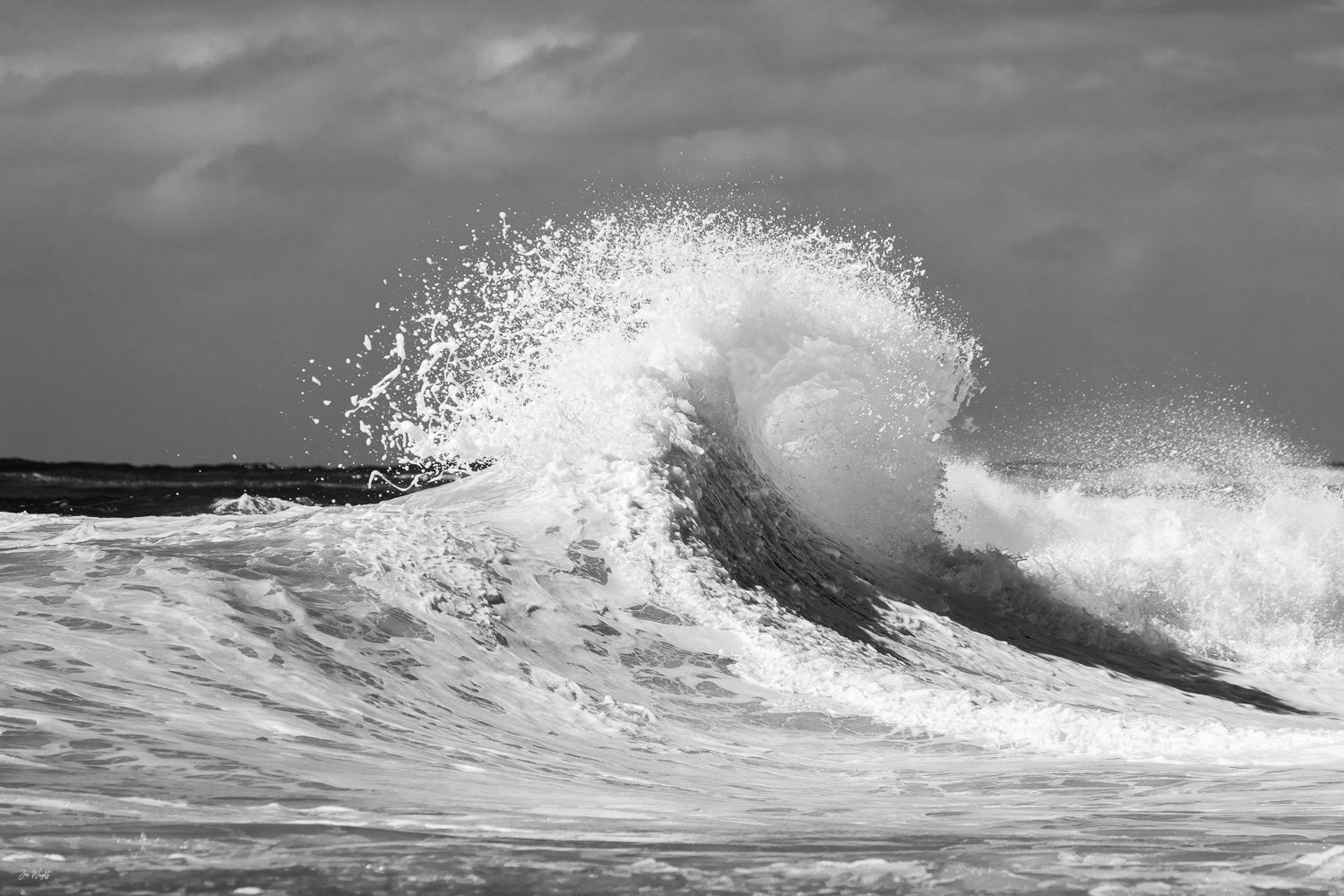
Most of what's written about buying surf photography online comes from print sellers who've never actually been in the water with a camera. I have, for years, swimming out at Duranbah, Snapper Rocks, Kirra and Burleigh Heads with a housing over my camera, timing sets and waiting for the right wave the same way the surfers around me were. One of those shots, Exit Wave, won overall winner at the 2010 Digital Camera World Photographer of the Year awards, plus first in the Adrenalin category, and later made the cover of Capture magazine's Australia's Top Emerging Photographers issue. That's the difference buying from someone who shoots the sport rather than just prints it: you're getting a genuine moment, not a stock composition.What makes a surf photograph work as artA good surf shot isn't just a wave, it's timing. Sometimes that's a surfer, the barrel closing in behind them, the split second of a duck dive. The Duck Dive is one of mine that still gets requested most, super clear water letting you see straight through the wave as the surfer rises. But surf art doesn't need a surfer in it at all, an empty wave at the exact moment it explodes, the spray peeling off the lip, is its own kind of timing and its own kind of art. Southern Gold, a top 10 finish in the Australian Surf Photographer of the Year awards, is a wave with nobody on it, just the water rearing and about to break. Webbed Hands is the same idea taken further, backwash off a rock wall caught at the instant it forms shapes like fingers. Neither needed a surfer to be a genuine surf photograph.The Gold Coast breaks, and what each one gives youEvery break has its own character and its own kind of shot. Kirra and Duranbah are where the barrels happen, tight, powerful, and where a lot of my water shots come from, Inside Out at Kirra is a good example. Snapper Rocks is where the line-ups and the aerial perspective come into their own, Birds Eye Line Up shows the crowd and the wave from directly above. Burleigh Heads sits in between, both the barrel and the wider landscape, Burleigh Birds Eye captures that scale.Choosing a pieceDecide first what you're after: the water level intensity of being in the wave with a surfer, like The Duck Dive or Inside Out at Kirra, an empty wave caught at its most dramatic moment, like Southern Gold or Webbed Hands, or the wider, calmer perspective of an aerial line-up shot. All three read very differently in a room, one is energy and motion, one is texture and timing, the other is pattern and scale. A number of these are also available in black and white if you want the same shot with less colour competing with the rest of your room.Sizing and orientationMost surf shots suit a landscape crop, above a sofa or along a hallway, aim for 60-75% of the available wall space, and two-thirds the width of any furniture it's hanging above. The aerial line-up shots often work as a panorama or square crop instead, similar to the aerial collection.Framed, canvas or acrylicSame rule as everywhere else in the shop: it depends on the room's light, not the image. Acrylic gives the most detail and depth but is reflective, so it wants a wall without direct glare. Canvas absorbs more light and suits a bright room. Framed is the traditional option, and pairing it with our non-reflective glass cuts down glare if that's a concern.Where to startThe full range is in the Surf Art collection, 86 pieces spanning Snapper Rocks, Currumbin, Kirra, Burleigh Heads and Bondi Beach, in colour and black and white.
Learn more
Framed, Canvas or Acrylic? Choosing the Right Print for Your Wall
I get asked this more than almost anything else in the shop: framed, canvas or acrylic, which one should I choose? There's no single right answer, it comes down to the room the print is going into more than the image itself, specifically what the light in that room is doing.AcrylicAcrylic gives you the most detail and the most depth to the colour of any of the three, a bit like looking at a 4K screen rather than a flat print. The trade-off is that it's reflective, so it wants a wall that isn't fighting glare from a window or a light source directly opposite it. In the right spot it's the most striking option in the range, in the wrong spot the reflection will bother you more than the image pleases you.CanvasCanvas absorbs more of the light hitting it rather than bouncing it back, which makes it the better pick for a bright room, a wall that catches direct sun, or anywhere acrylic's reflection would be a problem. All of our canvas prints are available with a float frame, which brings some of the presence of a framed piece without the glass.FramedFramed is the traditional, timeless option, and it's the one most people default to. If you like the idea of a frame but you're worried about glare, we offer non-reflective glass on our framed prints, it cuts the reflection right down while keeping the classic look.So which one?Look at the wall before you look at the image. A room with strong direct light usually suits canvas or a non-reflective framed piece better than acrylic. A room with softer, indirect light is where acrylic really earns its price tag. If in doubt, our View In Room tool lets you preview a print in your own space before you decide. Once you've settled on a finish, our wall art size guide covers how big to go for your space.All three finishes are available across the full range, from aerial photography to ocean art to the black and white collection, just choose your finish from the options on any product page.
Learn more